Why Is Hospital Equipment Important for Global Buyers?
Hospital Equipment is no longer a local purchasing concern. It is a global health infrastructure decision. A reliable ventilator, sterilizer, or infusion pump can determine whether treatment continues during a crisis. A poorly supported device can become an expensive metal box.
The World Health Organization’s Global Atlas of Medical Devices reports that many low- and middle-income countries import 70% to 90% of their medical devices. This dependence makes buyers examine supply continuity, spare parts, training, and technical support. The WHO also reports that more than 2.5 billion people lack access to assistive products, revealing a wider equipment gap. In a rural clinic, one missing battery or incompatible sensor may stop essential care. Small details matter.
Dr. Margaret Chan, former Director-General of the WHO, stated, “Without medical devices, modern health care would not be possible.” Her point remains practical, not merely theoretical. Industry reports from WHO and the World Bank show that equipment value depends on infrastructure, workforce skills, and maintenance capacity. Buyers must therefore assess total ownership costs, not only purchase prices. This includes calibration, cybersecurity, local servicing, waste management, and replacement cycles. The WHO and UNICEF Joint Monitoring Programme also found that hundreds of millions of people use health facilities without basic water services. That reality complicates equipment deployment. No report captures every local failure. That is an important weakness. Global buyers need evidence, but they also need field experience, careful questioning, and honest risk assessment.
What Hospital Equipment Covers: WHO Identifies Over 2 Million Device Types
Why Is Hospital Equipment Important for Global Buyers?
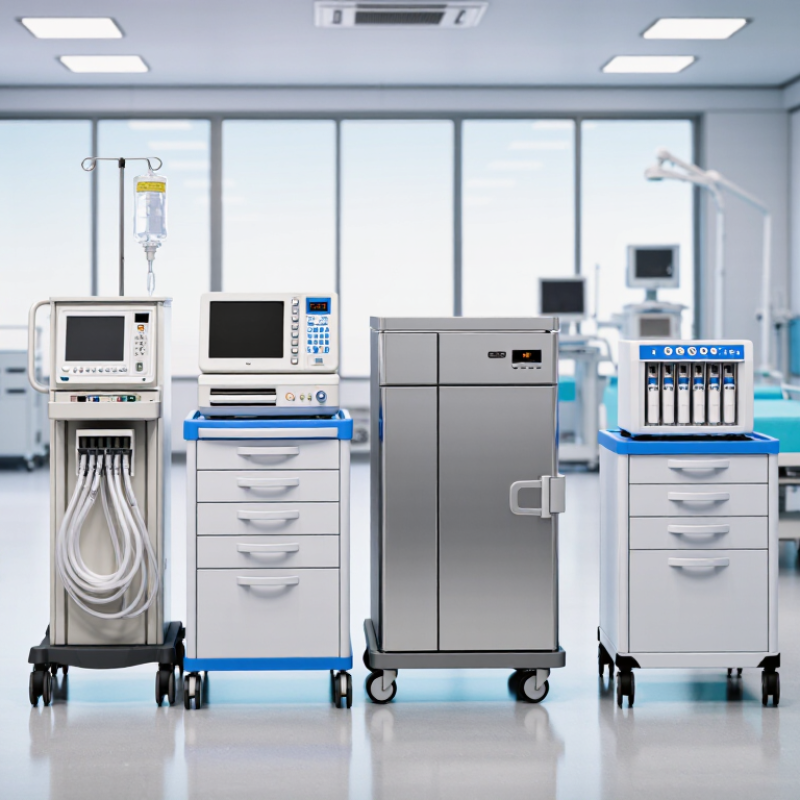
The World Health Organization identifies more than 2 million medical device types worldwide, grouped into over 7,000 categories. This scope includes imaging systems, surgical instruments, diagnostic tests, beds, oxygen equipment, software, and basic consumables. Not just machines. A rural clinic may need a pulse oximeter that survives dust, heat, and unstable electricity. A tertiary hospital may require imaging equipment with reliable data integration and trained operators.
WHO’s Global Atlas of Medical Devices highlights major differences in equipment availability between countries and health facilities. These differences make purchasing more complex than comparing prices. Buyers should examine intended use, maintenance intervals, spare-part access, calibration needs, and staff training. The World Bank’s medical device guidance also stresses that technology must fit local infrastructure, financing, and clinical capacity. A technically advanced device can remain unused if no engineer can service it.
This is where buyers can get it wrong. A specification sheet may appear complete, yet overlook voltage fluctuations, language settings, infection-control routines, or disposal requirements. Small details matter. The WHO and UNICEF WASH reports continue to show uneven access to reliable water, sanitation, and hygiene services in healthcare settings. Equipment selection should therefore consider cleaning procedures and safe installation, not only performance claims. Procurement teams need evidence from recognized standards, field evaluations, user feedback, and transparent supplier documentation. Even experienced buyers should review their assumptions. The “best” device is not always the most advanced one; sometimes it is the one staff can operate correctly every day.
Why Diagnostics Matter: Laboratory Results Guide Up to 70% of Clinical Decisions
For global hospital buyers, diagnostic equipment is not an optional department purchase. Laboratory results can influence up to 70% of clinical decisions, according to figures widely cited by laboratory medicine organizations and public health agencies. That influence reaches triage, infection control, medication selection, and discharge planning. A blood sample collected at 8 a.m. may determine whether a patient receives antibiotics, surgery, or observation by noon.
The numbers also reveal a difficult reality. The World Health Organization reports that an estimated 47% of the world’s population lacks access to essential diagnostics. In many low- and middle-income settings, shortages involve analyzers, trained staff, quality controls, and reliable electricity. Equipment specifications alone cannot solve this problem. Buyers should examine result accuracy, turnaround time, calibration requirements, reagent stability, service training, and operation during power interruptions.
Procurement teams need evidence, not impressive brochures. The OECD’s Health at a Glance reports show persistent differences in healthcare access and outcomes across countries. Those differences make dependable diagnostics especially important for hospitals serving remote or crowded communities. A faster test is not always a better test. Sometimes, a simpler platform produces more consistent results because staff can maintain it properly. This is easy to overlook. Buyers should also review external quality assessment data, maintenance records, and user feedback from comparable facilities. One uncomfortable question remains: can the hospital sustain the equipment five years after installation?
Why Reliability Matters: Up to 70% of Devices Fail in Some LMICs
Why Is Hospital Equipment Important for Global Buyers?
Hospital equipment is not merely a purchase; it supports diagnosis, treatment, and daily clinical decisions. In some low- and middle-income countries, up to 70% of devices may fail or remain unusable. The exact rate varies by facility and study, but the warning is serious.
Reliability begins before shipment. Buyers should check voltage stability, humidity tolerance, dust protection, and operating temperatures. A monitor can arrive safely yet fail during a power fluctuation. A sterilizer may stop when water quality changes. Small details matter.
Spare parts, service manuals, calibration tools, and local technician training should be included in the procurement plan. Acceptance testing can reveal inaccurate readings, weak batteries, or missing accessories before patient care begins.
Cost still matters, but the cheapest offer can create expensive downtime. Procurement teams sometimes focus on specifications and overlook maintenance capacity. That is an understandable mistake. A device requiring rare parts may become unusable after one minor fault. Buyers should review failure records, warranty response times, user training, and repair pathways. Independent technical evaluation adds confidence, especially when product claims sound too perfect. No system is flawless. Reliable purchasing means identifying likely failures early and building practical support around the equipment.
How Buyers Assess Total Cost: Maintenance Can Reach 80% of Life-Cycle Costs
For global hospital buyers, equipment cost begins long before the first patient uses it. The purchase price may look attractive, but installation, staff training, calibration, and validation add immediate expenses. In some equipment categories, maintenance can reach 80% of total life-cycle costs. That figure should trigger careful questions, not automatic acceptance.
Buyers should request a five- to ten-year cost model. Include scheduled servicing, replacement parts, software updates, energy use, and technical support.
Also calculate downtime. A scanner that remains idle for two days can delay procedures, reschedule patients, and increase pressure on nearby departments.
Local technicians, spare-part availability, and response times matter greatly in regions with limited infrastructure. A detailed service agreement should define inspection intervals, repair targets, training responsibilities, and warranty exclusions.
Real procurement work is rarely perfect. Forecasts may underestimate shipping delays, currency changes, or unexpected repairs. We once treated a low-maintenance estimate as reliable because it came from a standard worksheet. That assumption needed review.
Buyers should compare supplier data with service records from similar hospitals and ask for evidence behind every estimate. Maintenance logs, failure rates, and technician qualifications offer stronger guidance than polished sales claims.
A slightly higher purchase price may be reasonable when equipment has accessible components, clear diagnostic tools, and dependable regional support. Keep the assumptions visible. Recheck them annually.
How Buyers Verify Quality: ISO 13485 Supports Medical-Device Quality Management
Why Is Hospital Equipment Important for Global Buyers?
How Buyers Verify Quality: ISO 13485 Supports Medical-Device Quality Management
Hospital equipment affects diagnosis, treatment, and patient safety. Quality failures can also disrupt procedures, delay care, and increase replacement costs. The World Health Organization estimates that more than two million medical-device types exist worldwide. This variety makes supplier evaluation difficult for global buyers.
ISO 13485 provides a structured quality-management framework for medical-device manufacturers. It covers risk management, design controls, supplier monitoring, traceability, corrective actions, and documented processes. The ISO Survey 2023 recorded more than 30,000 ISO 13485 certificates globally. This figure shows broad adoption, but certification alone is not proof of every product’s quality. Buyers should inspect the certificate scope, validity, manufacturing site, and covered device categories. A supplier may hold certification while still showing weak batch records or slow corrective actions. That gap deserves careful review.
Tips: Ask for recent audit findings, device-specific test reports, calibration records, and sample traceability. Check whether incoming materials, production steps, and final inspections are clearly documented. During a factory visit, follow one product from raw material storage to packing. Small details matter. Missing labels, handwritten changes, or unclear quarantine areas can reveal process weaknesses. Buyers should also compare promised specifications with actual samples. Specifications sometimes look precise, yet practical performance remains uncertain. Independent testing can reduce that uncertainty before large orders.
Why Hospital Equipment Quality Matters to Global Buyers
ISO 13485:2016 organizes medical-device quality management around five core areas. Buyers can use these areas to verify whether a supplier has documented controls for consistent production, regulatory compliance, and product improvement.
The chart uses the five main ISO 13485:2016 quality-management-system sections: Quality Management System, Management Responsibility, Resource Management, Product Realization, and Measurement, Analysis and Improvement. The values represent the clause-section numbers and are a reference map, not a supplier-performance score.