
What Are the Best Medical Supplies from China?
China has become a major source of Medical Supplies for hospitals, clinics, laboratories, and home-care providers. Its manufacturing base covers examination gloves, surgical masks, wound-care products, mobility aids, diagnostic accessories, and hospital furniture. However, product quality can vary between suppliers, even when listings appear similar.
This guide examines which Medical Supplies may offer practical value and what buyers should verify before ordering. It considers material quality, production consistency, packaging, traceability, and documented compliance with the destination market’s requirements. Experienced procurement teams often request samples, inspect labeling, and compare batch records before approving larger shipments. A box of disposable gloves should feel consistent, seal correctly, and display clear lot information. Small details matter.
Supplier evaluation also requires more than reviewing attractive catalogs. Buyers should check factory experience, quality-management systems, independent testing, and after-sales support. Certifications deserve careful review because a document alone does not prove reliable performance. That point is easy to overlook. Shipping conditions, storage temperatures, and local registration rules can also affect product suitability. This introduction will highlight common strengths, realistic limitations, and safer purchasing practices when sourcing Medical Supplies from China. Some products may be competitively priced, yet lower cost is not automatically better value. Product performance, continuity of supply, and patient safety remain more important than a quick quotation. Requirements differ by country and use case, so professional advice may still be necessary. Procurement decisions should remain evidence-based, transparent, and open to revision when new inspection results appear.
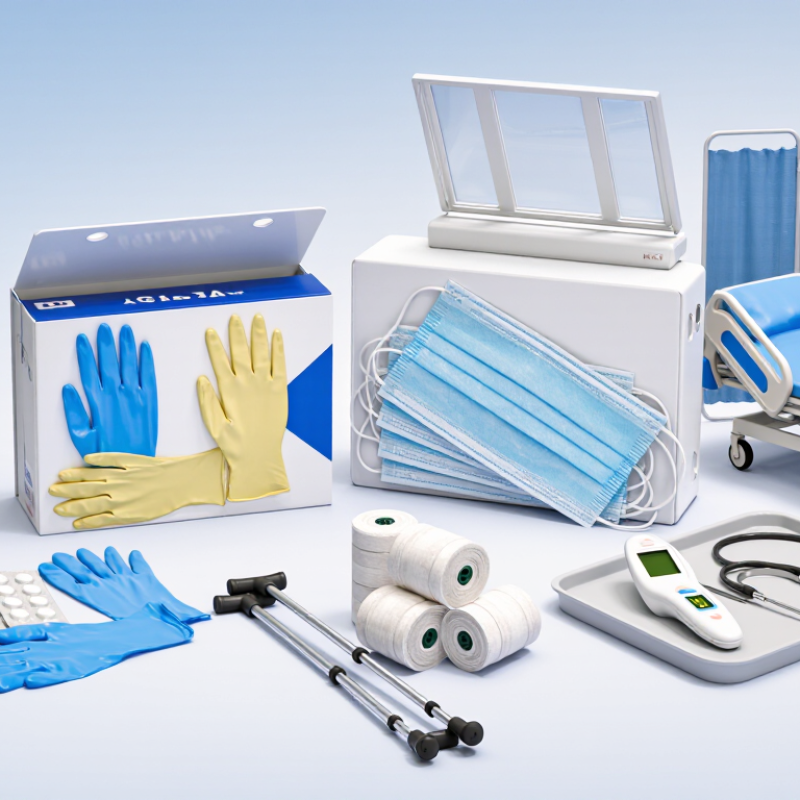
Market Scope: China’s RMB 1.26T Medical-Device Sector in 2023
What Are the Best Medical Supplies from China?
China’s medical-device sector reached approximately RMB 1.26 trillion in 2023, according to the China Medical Device Industry Association’s 2024 industry report. The figure covers equipment, consumables, diagnostics, rehabilitation products, and home-care devices. It is a large market.
For buyers, practical strengths often appear in high-volume supplies. These include disposable examination items, infusion accessories, wound-care products, patient monitors, ultrasound components, laboratory consumables, and mobility aids. China’s National Medical Products Administration reported continued growth in registered medical devices during 2023, reflecting deeper domestic manufacturing capacity. However, registration volume does not automatically prove clinical quality. That distinction matters.
A reliable sourcing process should examine ISO 13485 certification, product registration, sterilization records, lot traceability, and failure-rate evidence. Independent testing should confirm electrical safety, biocompatibility, packaging integrity, and shelf life. The World Health Organization’s guidance on medical-device procurement also emphasizes transparent specifications and post-market surveillance. Buyers should request samples before larger orders. Small details reveal problems.
The RMB 1.26 trillion estimate also needs careful interpretation. It describes market value, not guaranteed export performance or equal quality across suppliers. Some low-cost products may offer excellent consistency. Others may need stronger documentation, clearer instructions, or better after-sales support. Personal experience in procurement suggests that the cheapest quotation can become expensive after inspections, delays, and replacements.
What Are the Best Medical Supplies from China?
| Supply Category | Representative Products | Primary Healthcare Use | Typical China NMPA Classification | 2023 Market Relevance | Key Procurement Data Points | Typical Buyer Profile |
|---|---|---|---|---|---|---|
| Basic Consumables | Disposable syringes, needles, infusion sets, blood-collection tubes and wound dressings | Injection, infusion, specimen collection, wound care and routine clinical procedures | Usually Class II–III | High-volume segment | Sterility assurance, biocompatibility, packaging integrity, lot traceability and shelf life | Hospitals, clinics, laboratories, distributors and public-health programs |
| Protective Medical Supplies | Medical masks, surgical masks, protective clothing, caps, shoe covers and sterile gloves | Infection prevention and occupational protection in healthcare settings | Usually Class I–II | Mature, scalable segment | Filtration performance, fluid resistance, bacterial filtration, material safety and conformity documentation | Hospitals, laboratories, emergency services and institutional purchasers |
| Patient Monitoring | Multiparameter monitors, pulse oximeters, electrocardiographs and non-invasive blood-pressure monitors | Vital-sign monitoring in wards, emergency departments, operating rooms and home care | Usually Class II | Broad hospital adoption | Measurement accuracy, alarm reliability, electrical safety, software validation and network compatibility | Hospitals, outpatient centers, ambulances and home-health providers |
| Medical Imaging | Ultrasound systems, digital radiography systems, computed tomography and magnetic-resonance equipment | Screening, diagnosis, treatment planning and clinical follow-up | Usually Class II–III | High-value capital-equipment segment | Image quality, radiation safety where applicable, uptime, service capability and installation requirements | General hospitals, specialty hospitals, imaging centers and medical institutions |
| In-Vitro Diagnostics | Clinical chemistry reagents, immunoassays, molecular tests, hematology analyzers and sample-preparation products | Screening, diagnosis, disease monitoring and laboratory medicine | Class I–III by risk | Fast-growing diagnostic segment | Analytical sensitivity, specificity, calibration, reference ranges, quality controls and cold-chain requirements | Hospital laboratories, independent laboratories, clinics and public-health laboratories |
| Respiratory-Care Equipment | Oxygen concentrators, oxygen-flow meters, ventilators, nebulizers and respiratory circuits | Respiratory support, oxygen therapy and aerosol treatment | Usually Class II–III | Important acute-care segment | Flow and pressure accuracy, oxygen concentration, alarm systems, infection control and maintenance support | Hospitals, emergency departments, long-term-care facilities and home-care users |
| Dialysis and Blood-Processing Supplies | Dialyzers, blood tubing sets, filters, blood bags and related extracorporeal-circuit components | Hemodialysis, blood collection, transfusion and therapeutic blood processing | Usually Class III | Specialized, regulated segment | Material compatibility, endotoxin control, sterility, flow performance and validated manufacturing processes | Dialysis centers, hospitals, blood centers and specialty-care providers |
| Surgical and Operating-Room Supplies | Surgical instruments, electrosurgical accessories, operating-room drapes, suction products and laparoscopic accessories | General surgery, minimally invasive surgery and perioperative care | Class I–III by risk | Stable institutional demand | Material grade, sterilization validation, mechanical performance, single-use status and packaging integrity | Hospitals, surgical centers and medical-device distributors |
| Orthopedic and Rehabilitation Devices | External supports, rehabilitation equipment, orthopedic instruments and selected implantable products | Musculoskeletal treatment, post-operative rehabilitation and physical therapy | Class I–III by risk | Growing aging-population demand | Load performance, clinical evidence, material safety, patient fit, serviceability and post-market surveillance | Hospitals, rehabilitation centers, clinics and home-care providers |
| Digital and Connected Medical Devices | Remote-monitoring devices, medical software, connected sensors and electronic medical-record interfaces | Remote care, clinical decision support, data management and chronic-disease monitoring | Classification varies | Emerging technology segment | Cybersecurity, data privacy, software lifecycle controls, interoperability and clinical performance evidence | Hospitals, telehealth providers, clinics and chronic-care programs |
Market context: The RMB 1.26 trillion figure is a commonly cited 2023 estimate for China’s overall medical-device market. It covers a broad range of equipment, instruments, consumables, diagnostics and related medical devices; it should not be interpreted as the independently reported revenue of any single product category.
Classification and compliance reference: China’s National Medical Products Administration (NMPA) medical-device classification framework, the State Administration for Market Regulation standards framework, and applicable Chinese national and industry standards. Product classification can vary according to intended use, technical characteristics, sterility and risk level.
Related Posts
-
Why Is Hospital Equipment Important for Global Buyers?
-

China's Resilient Growth in Medical Supplies Amid US China Tariff Parity
-
Challenges Faced When Selecting Best Used Medical Equipment for Your Facility
-
China Crafted Medical Equipment Elevating Global Standards for Quality
-

Challenges in Medical Device Design that Could Affect Patient Outcomes
-

How to Accelerate Your Medical Device Development Process for Faster Market Entry