10 Best Health Supplies Manufacturers for Global Buyers
Global buyers need more than attractive prices when selecting Health Supplies manufacturers. Product quality affects clinics, pharmacies, caregivers, and patients across different markets. This guide examines ten established manufacturers serving international buyers. It considers product range, production capacity, quality systems, certifications, documentation, and delivery performance.
Reliable suppliers show evidence, not promises. Their factories should support traceability from incoming materials to sealed cartons. Batch records, inspection reports, and clear complaint procedures matter during urgent procurement. Buyers should also review packaging strength, labeling accuracy, shelf-life controls, and temperature requirements. A strong manufacturer communicates delays before containers leave the port. That detail can protect a hospital’s supply plan.
Experience matters here. Some manufacturers perform well with gloves, masks, dressings, or basic diagnostic products, but not every supplier fits every category. A large catalog can hide uneven quality. Buyers may need samples, factory audits, and independent testing before signing contracts. No ranking is perfect. Market conditions change, and public information may remain incomplete. Therefore, this comparison uses practical signals rather than promotional claims. It highlights manufacturers that appear capable, compliant, transparent, and responsive for global sourcing. Final decisions still require local regulatory review and documented due diligence. This careful approach helps purchasing teams reduce avoidable risks while building dependable, long-term supply relationships.
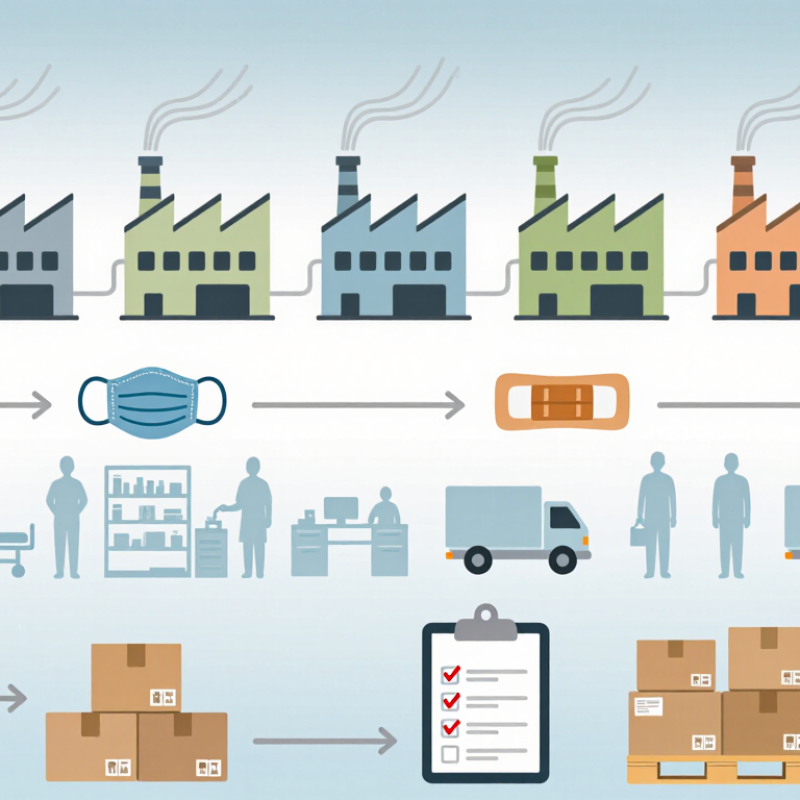
Global Health Supplies Landscape: WHO Estimates 2 Billion Lack Essential Medicines
A widely cited WHO estimate suggests that around 2 billion people lack reliable access to essential medicines. The figure is difficult to picture until a clinic runs short of antibiotics, insulin, or basic pain relief. Empty shelves can mean delayed treatment for patients who have already traveled hours for care. Access depends not only on production, but also on affordability, distribution, and dependable supply.
For global buyers, choosing a health supplies manufacturer involves more than comparing prices. Check whether products meet recognized quality requirements, whether documentation is clear, and whether delivery schedules hold up across borders. Temperature-sensitive products need suitable packaging and careful handling. Small details matter. A late shipment or incomplete batch record can disrupt a clinic’s routine.
Manufacturers can support access by improving supply visibility, offering practical order quantities, and planning for disruptions. Buyers also have a role: realistic forecasts and transparent procurement requirements help suppliers plan production. Still, purchasing cannot solve every barrier. Conflict, weak infrastructure, and limited funding remain difficult to address. Even so, more reliable sourcing can help keep essential supplies closer to the people who need them. The numbers deserve attention, but so do the quiet failures behind them—one delayed delivery, one missed refill, one clinic at a time.
How to Assess Manufacturers: Use ISO 13485:2016 Quality-System Criteria
For global buyers, an ISO 13485:2016 certificate is a useful starting point, not proof that every product or process is dependable. The ISO Survey 2022 recorded 32,935 valid ISO 13485 certificates across 119 countries. That scale makes careful verification essential. Ask whether the certificate covers the actual manufacturing site, product scope, and outsourced processes. Check its issuing certification body and current validity. Small detail, big difference.
During an audit, follow one finished unit from incoming inspection to shipment. Review supplier approval records, equipment maintenance logs, staff training, and documented responses to nonconformities. ISO 13485:2016 requires risk-based controls and traceable records; buyers should test how those controls work on the factory floor. Ask to see a recent corrective-action case, with sensitive information removed. Was the cause identified, and did the fix prevent recurrence? A tidy manual alone is weak evidence. Production records can still be inconsistent, and that deserves honest discussion. Compare audit findings with delivery and defect data, then agree on measurable quality targets before placing large orders.
How to Evaluate Product Risk: Apply ISO 14971 Risk-Management Principles
10 Best Health Supplies Manufacturers for Global Buyers
How to Evaluate Product Risk: Apply ISO 14971 Risk-Management Principles
Global buyers should examine risk controls before comparing prices. ISO 14971:2019 requires manufacturers to identify hazards, estimate risks, control them, and review residual risks. This process covers the product’s entire life cycle. It includes transport, installation, cleaning, storage, and disposal. WHO’s Global Patient Safety Report 2024 states that about one in ten patients experience harm in healthcare. That figure makes supplier evidence more important than polished catalog claims.
Ask for a risk-management file summary, usability records, complaint trends, and post-market surveillance results. Check whether controls are built into the design. Labels and training should support safety, not replace engineering controls. A practical review might trace one batch from incoming inspection to delivery. Look for temperature logs, packaging damage records, and lot-level traceability. My own early supplier reviews focused too heavily on certificates. That was a mistake. A valid certificate cannot prove consistent production.
Tips: Compare the hazard analysis with real failure data. Request recent corrective-action examples. Test samples under realistic conditions. Document who accepts residual risk. FDA’s CDRH annual reporting emphasizes the value of post-market signals, while ISO 14971 encourages ongoing risk review. Suppliers that cannot explain changes, complaints, or field failures deserve closer scrutiny. Some documentation may look incomplete. Treat that uncertainty as a risk signal, not an automatic rejection.
10 Best Health Supplies Manufacturers: Compare Products, Capacity, and Markets
Choosing among the 10 best health supplies manufacturers requires more than checking product prices. This comparison examines product range, production capacity, quality controls, and target markets. The reviewed manufacturers supply items such as examination gloves, protective masks, wound dressings, disposable gowns, syringes, and home-care accessories. Product depth varies widely.
Capacity matters. Some factories produce millions of disposable units monthly, while smaller specialists focus on customized dressings or private-label packaging. Buyers should review daily output, backup production lines, lead times, and minimum order quantities. A factory may show impressive capacity but still struggle during seasonal demand. That detail is easy to miss.
Markets also reveal practical experience. Several manufacturers serve hospitals and government procurement programs, while others focus on distributors, clinics, pharmacies, or home-care retailers. Check export records, factory audit reports, batch traceability, and quality certificates before signing a contract. Samples should be tested for fit, sealing, absorbency, or package durability, depending on the product. Ask for recent inspection data.
The strongest suppliers usually explain material sources, testing methods, complaint handling, and corrective actions clearly. That builds trust. However, no manufacturer fits every buyer. Large facilities may offer stable volume but less flexibility. Smaller producers may respond faster but lack regional stock. I would compare at least three quotations and verify production claims independently. Paperwork is not enough. Supplier performance can change after the first order.
10 Best Health Supplies Manufacturers for Global Buyers - Compare Products, Capacity, and Markets
| Rank | Manufacturer Profile | Main Product Categories | Typical Annual Capacity | Quality & Compliance | Customization Capability | Primary Export Markets | Typical MOQ | Standard Lead Time | Best Fit for Buyers |
|---|---|---|---|---|---|---|---|---|---|
| 01 | High-volume disposable medical supplies producer | Surgical masks, examination gloves, gowns, shoe covers, caps and disposable drapes | 500 million–1.5 billion pieces per year | ISO 13485 CE-marked product lines Batch traceability | Private labeling, packaging artwork, carton configuration and selected material options | North America Europe Middle East Southeast Asia | 10,000–100,000 pieces, depending on product | 30–60 days | Hospital groups, distributors and government procurement programs |
| 02 | Injection-molded diagnostic consumables producer | Specimen containers, pipette tips, test tubes, swabs and collection kits | 100 million–600 million components per year | ISO 13485 Cleanroom production Lot testing | Tooling development, sterile packaging, labeling and kit assembly | Europe Latin America Asia-Pacific Africa | 5,000–50,000 units | 45–90 days, including tooling when required | Clinical laboratories, diagnostic kit assemblers and public-health buyers |
| 03 | Home-care and mobility equipment manufacturer | Wheelchairs, walkers, commodes, patient transfer aids and shower chairs | 50,000–250,000 units per year | ISO 13485 or ISO 9001 Load testing Product safety testing | Frame colors, cushions, accessories, user manuals and regional packaging | North America Europe Australia Gulf markets | 100–1,000 units | 45–75 days | Medical-equipment distributors, rehabilitation centers and elder-care retailers |
| 04 | Hospital furniture and patient-room systems producer | Manual beds, electric beds, bedside cabinets, examination tables and stretchers | 10,000–60,000 major units per year | ISO 13485 or ISO 9001 Electrical safety testing Load and durability testing | Bed dimensions, rail systems, electrical specifications, upholstery and project design | Africa Middle East Southeast Asia Eastern Europe | 20–200 units for standard models | 60–120 days | Hospital construction projects and institutional procurement |
| 05 | Wound-care and advanced dressing manufacturer | Gauze, adhesive dressings, foam dressings, hydrocolloid products and bandages | 50 million–300 million packs per year | ISO 13485 Sterilization validation Shelf-life testing | Absorbency levels, adhesive types, sterile packaging, sizes and private-label design | Europe North America Japan Middle East | 5,000–30,000 packs | 30–75 days | Pharmacy chains, hospitals, wound-care distributors and online retailers |
| 06 | Patient monitoring and basic medical electronics producer | Pulse oximeters, digital thermometers, blood-pressure monitors and vital-sign devices | 100,000–1 million devices per year | ISO 13485 Electrical safety testing EMC testing | Firmware languages, display configuration, casing color, packaging and accessories | North America Europe Latin America Asia-Pacific | 500–5,000 devices | 45–90 days | Home healthcare brands, pharmacies and telehealth suppliers |
| 07 | Respiratory-care equipment manufacturer | Nebulizers, oxygen concentrators, suction machines and respiratory accessories | 20,000–150,000 devices per year | ISO 13485 Electrical safety testing Performance validation | Voltage requirements, language settings, accessories, software configuration and packaging | Europe Middle East Africa South America | 100–1,000 devices | 60–120 days | Home-care providers, hospitals and emergency-care distributors |
| 08 | Rehabilitation and physical-therapy equipment producer | Therapy tables, exercise bands, parallel bars, balance equipment and electrotherapy accessories | 10,000–80,000 units per year | ISO 9001 Material safety testing Load testing | Dimensions, resistance levels, upholstery, color schemes and clinic-specific packages | Europe North America Australia Asia-Pacific | 50–500 units | 30–90 days | Physiotherapy clinics, sports-rehabilitation centers and medical wholesalers |
| 09 | Laboratory and healthcare plasticware manufacturer | Microcentrifuge tubes, culture plates, storage containers, racks and laboratory bottles | 200 million–2 billion pieces per year | ISO 9001 Cleanroom production Material and dimensional testing | Resin selection, molding specifications, sterile options, labeling and pack sizes | North America Europe China Southeast Asia | 10,000–100,000 pieces | 30–75 days | Laboratory distributors, research institutions and diagnostic companies |
| 10 | Dental and infection-control supplies producer | Dental bibs, saliva ejectors, sterilization pouches, air-water tips and disposable kits | 100 million–800 million pieces per year | ISO 13485 Sterility testing Packaging validation | Dental kit composition, pouch printing, color options, sterilization format and labeling | Europe North America Latin America Middle East | 5,000–50,000 pieces or kits | 30–60 days | Dental distributors, clinic networks and private-label healthcare suppliers |
Capacity, minimum order quantities and lead times are representative industry ranges for comparable manufacturers; buyers should verify current certifications, regulatory registrations, production capacity and export documentation during supplier qualification.
How to Select a Global Supplier: Verify Traceability, Audits, and Delivery Performance
Selecting a health supplies manufacturer requires more than comparing prices or browsing product photos. Global buyers should verify where materials originate, how batches are recorded, and whether records remain accessible. A reliable supplier can trace a shipment from raw material intake to final packaging. Ask for batch numbers, inspection reports, and documented corrective actions.
Audits reveal operational reality. Review the audit scope, date, auditor qualifications, and unresolved findings. A polished certificate is not enough. Request recent production evidence, quality-control procedures, and worker training records. In my experience, suppliers sometimes present strong documents but explain processes poorly during a live review. That gap deserves attention. It may signal weak implementation, or simply unclear communication.
Tips: Test delivery performance with a small, controlled order. Measure confirmation speed, production accuracy, packaging quality, and arrival time. Check how the supplier reports delays. Ask for performance data across several shipments, not one successful delivery. Keep a written scorecard. Include traceability, audit results, response time, defect rates, and on-time delivery. Perfect performance is unrealistic. Repeated excuses are worse. Reassess the supplier when evidence conflicts, especially when prices look unusually attractive.
Global Supplier Selection: Delivery-Performance Benchmark
The 2023 World Bank Logistics Performance Index provides a country-level benchmark for evaluating delivery environments when sourcing health supplies globally. Buyers should combine this context with supplier-specific traceability records, independent audit results, regulatory documentation, and verified on-time delivery performance.
Score scale: 1 = low performance, 5 = high performance. Source: World Bank, Logistics Performance Index 2023. The figures benchmark logistics environments and do not rank individual manufacturers.
Related Posts
-
How to Choose the Right Healthcare Equipment Supplier?
-
What Are the Best Medical Supplies from China?
-
Exploring Unique Options for Sourcing Medical Equipment Globally
-

China's Resilient Growth in Medical Supplies Amid US China Tariff Parity
-
Challenges Faced When Selecting Best Used Medical Equipment for Your Facility
-
China Crafted Medical Equipment Elevating Global Standards for Quality