
Top 10 Vape Pin Types for Global Buyers

Global buyers often compare Vape Pin designs by appearance, yet the details that matter are less visible. Contact shape, dimensions, base material, and plating can affect fit, conductivity, and durability. Small parts matter. A pin can look correct and still fit poorly when tolerances differ between suppliers.

This guide introduces ten common pin types and explains where their designs may suit different device assemblies. It highlights practical checks, including pin diameter, spring travel, connection style, material specifications, and stated electrical ratings. These details help buyers ask clearer questions before requesting samples or placing orders. They do not guarantee compatibility. A careful fit test is still useful.

The right choice depends on the product design, manufacturing process, and destination market. Buyers should confirm that components meet applicable product requirements and obtain current documentation from suppliers. Where specifications are unclear, request drawings, material details, and test information. Not always obvious. A polished product page may omit an important measurement. This overview offers a starting point, not a substitute for engineering review or independent verification. It also recognizes that supplier data can vary in detail and quality. That gap deserves attention. Comparing the ten types side by side can make trade-offs easier to discuss, while helping teams avoid choosing a pin on appearance alone.
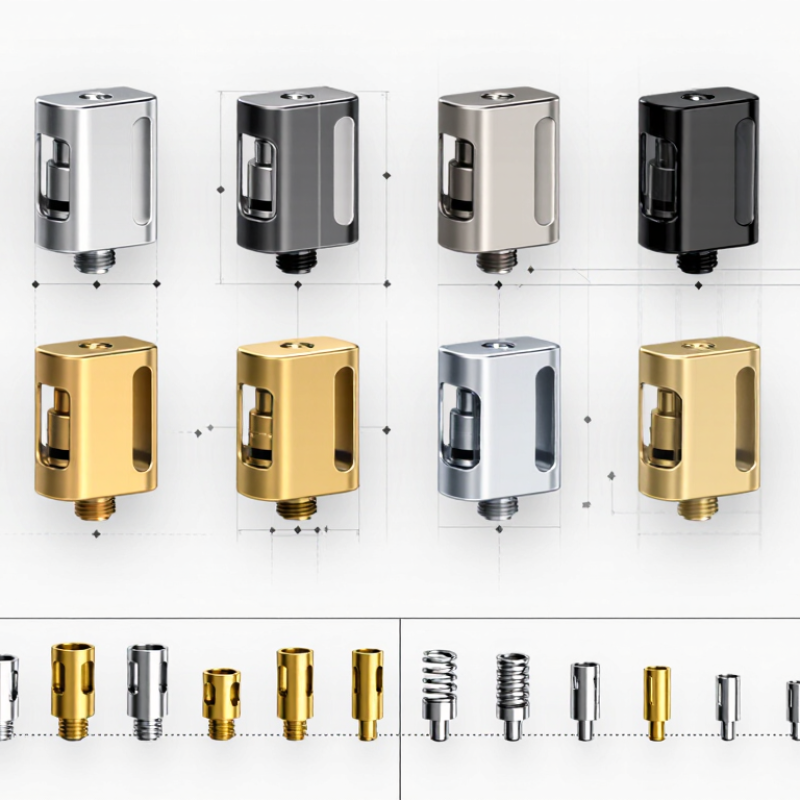
Top 10 Vape Pin Types for Global Buyers

What Vape Pins Are and How They Connect Device Components

Vape pins are conductive contacts that link a device’s power source to its atomizer assembly. They help complete the electrical path and keep adjoining components aligned. Common forms include fixed center pins, spring-loaded pins, pogo-style contacts, and magnetic contacts. A threaded connection may also use a center pin to carry current.

Small parts. Spring travel can help maintain contact when components sit slightly unevenly, while a fixed pin relies more on precise fit. Too little pressure can cause intermittent connection; too much can wear contact surfaces.

Grand View Research valued the global e-cigarette and vape market at USD 28.17 billion in 2023. That figure provides market context, not evidence of pin quality.

For connector testing, the IEC 60512 series describes methods for evaluating properties such as contact resistance and mechanical operation; it is not a vape-pin certification. On inspection, engineers can check pin movement, surface condition, and consistent seating, then test electrical continuity with suitable equipment.

One detail is easy to miss: a pin may look clean yet still make unreliable contact. Pin dimensions and materials also vary, so a design that fits one assembly may not suit another.

How Pin Shape, Position, and Contact Design Affect Performance

Pin designs are not a universal taxonomy, but common patterns include flat, rounded, spring-loaded, fixed, threaded, recessed, raised, side-mounted, dual-contact, and magnet-assisted contacts. These labels describe design features, not ten standardized categories. A flat face offers a broad mating area, while a rounded tip can help guide alignment. Spring-loaded pins accommodate small variations in height. Small details matter.

Position affects how reliably parts meet. A recessed pin can reduce accidental contact, but may not reach a poorly matched connector. A raised pin can improve reach, yet too much projection may strain mating parts. Threaded layouts can help maintain alignment when components are assembled correctly. Side-mounted and paired contacts place connection points differently; neither layout guarantees better performance. Fit matters.

Contact pressure, surface finish, and cleanliness also influence electrical consistency. Dust or residue can interrupt contact, while repeated movement may wear surfaces over time. Buyers should compare engineering drawings, pin travel, tolerances, and stated contact materials, rather than relying on appearance alone. Ask suppliers how each design is tested under repeated connection cycles. Specifications can still leave questions, so request sample measurements and inspect the mating parts together.

Ten Common Vape Pin Types Found in Global Vape Markets

Global vape markets use “pin” for several small electrical contacts and connector parts. The labels are not perfectly consistent. A catalog may describe the same contact as both adjustable and protruding, so buyers should compare drawings and dimensions.

Common designs include fixed center pins, spring-loaded pins, adjustable pins, flush-fit pins, and extended-contact pins. A threaded 510 connector pin is another familiar type; its center contact works with the connector’s threaded outer section. Magnetic contact pins also appear in some adapter systems.

Materials add another set of categories: brass pins are common, copper pins conduct well but can need more care, and stainless-steel pins offer corrosion resistance. These are ten commonly encountered types when design and material labels are counted together. They can overlap.

Check pin diameter, length, material, and connector specification before sourcing. A close visual match is not enough. Small differences can affect fit and electrical contact, and supplier terminology may leave details unclear.

Ask for a technical drawing when dimensions are missing.

How Threading, Dimensions, and Materials Determine Compatibility

Top 10 Vape Pin Types for Global Buyers

Threading, dimensions, and materials decide whether a pin fits securely and makes reliable contact. Common configurations include 510, 808, 901, M7, M8, magnetic, pogo, spring-loaded, press-fit, and proprietary pins. A familiar label is not a guarantee. The common 510 format is often described as M7 × 0.5 mm, but tolerances and contact geometry can differ between suppliers.

Measure twice. Check thread diameter, pitch, pin length, shoulder height, and contact travel against a technical drawing. A small mismatch may cause wobble, poor contact, or uneven wear. Material matters, too: copper alloys conduct well, while stainless steel can offer greater mechanical strength but lower conductivity. The Copper Development Association lists C11000 copper at about 101% IACS conductivity. That figure describes the material, not a finished pin’s performance. The IEC 60512 connector-test series provides methods for assessing electrical and mechanical characteristics; request relevant test results rather than relying on appearance.

Tips: Ask suppliers for dimensioned drawings, plating details, and sample measurements. Compare the mating part, not just the pin. A dimension can look close and still fail in assembly. If specifications are incomplete, flag the uncertainty before ordering.

Top 10 Vape Pin Types for Global Buyers — How Threading, Dimensions, and Materials Determine Compatibility

Representative connector standards are compared by nominal thread diameter. This is a dimensional reference, not a ranking or a complete compatibility check.

How to read this: Thread diameter and pitch must both match. The 510, 801, 808D-1, and eGo interfaces shown here have different nominal thread specifications. Pin protrusion, contact layout, airflow, and polarity can also affect fit. Contact pins are commonly made from copper or brass alloys, sometimes plated; material and plating affect conductivity and corrosion resistance, but do not make mismatched threads compatible.

What Global Buyers Should Check When Comparing Vape Pins

Top 10 Vape Pin Types for Global Buyers

What Global Buyers Should Check When Comparing Vape Pins

When comparing vape pins, start with fit and dimensions. Check the contact diameter, thread pitch, pin length, and tolerance range against the device drawing. A pin that looks right may still sit too high or wobble in its housing. Ask for measured samples, not just catalogue images. Small details matter.

Material affects conductivity, wear, and corrosion resistance. Stainless steel, copper alloys, and plated metals each behave differently, so request the exact grade and finish. A shiny surface is not proof of durable plating. Ask about coating thickness, adhesion checks, and resistance measurements. Results should match the stated test method.

Next, compare spring force, contact stability, and rated operating conditions. If a pin is spring-loaded, request cycle-test data and inspect how consistently it returns after compression. For fixed or threaded designs, check whether assembly torque can damage the contact or loosen it over time. There is no single best type. I would be cautious about choosing by price alone, though supplier data can be incomplete. Request inspection records, batch traceability, and clear packaging details before approving a production order.

Top 10 Vape Pin Types for Global Buyers - What Global Buyers Should Check When Comparing Vape Pins

Pin Type Typical Design Common Application What Buyers Should Check Key Trade-Off
Fixed 510 Center Pin A stationary center contact within a threaded 510 connection. The 510 format commonly uses a 7 mm diameter thread with a 0.5 mm pitch. Devices and components designed around a standard 510 connection. Confirm thread dimensions, contact position, mating compatibility, material, plating, and electrical continuity. Simple construction, but offers little tolerance for differences in mating contact height.
Spring-Loaded 510 Pin A movable center contact supported by a spring to accommodate some variation in mating-device height. 510 connectors where consistent contact is needed across compatible devices. Check travel, return action, contact resistance, cycle-life test method, and whether the pin can stick or bind. Can improve contact accommodation, but adds moving parts that require durability testing.
Adjustable Center Pin A center contact that can be repositioned, commonly by turning or setting it during assembly. Assemblies that require contact-height adjustment for a specific mating configuration. Ask how adjustment is retained, whether it can loosen in use, and what adjustment range and assembly procedure apply. Offers setup flexibility, but requires clear adjustment and retention controls.
Magnetic Contact Pin A conductive contact used with a magnetic coupling or adapter; the magnet may be part of the connector assembly rather than the pin itself. Products designed for a matching magnetic adapter system. Verify polarity, contact alignment, retention force, current rating, and compatibility with the intended adapter. Allows quick coupling, but is generally system-specific and may not fit standard threaded connections.
Threaded Contact Pin A conductive pin or terminal secured by threads into a connector body or assembly. Serviceable or mechanically secured connector assemblies. Check thread size and tolerance, locking method, resistance to loosening, and contact interface finish. Can be mechanically secure and replaceable, but needs correct assembly torque and thread control.
Press-Fit Pin A pin held in a suitably sized hole by mechanical interference, without relying on a separate threaded fastener. Production assemblies designed for repeatable insertion into a matching body or board. Confirm hole and pin tolerances, insertion force, retention strength, plating compatibility, and assembly inspection criteria. Supports streamlined assembly, but fit depends closely on controlled dimensions and materials.
Solder-Terminal Pin A contact with a terminal or tail intended to be joined to a wire or circuit by soldering. Wired or circuit-connected assemblies. Check terminal geometry, solderability, heat limits, compatible soldering process, and strain relief for attached wires. Provides an electrical joining method, but solder quality and heat control affect reliability.
Pogo Pin A spring-loaded electrical contact, usually built with a plunger, spring, and barrel. Compact or temporary contact interfaces designed around a matching mating surface. Review stroke, working force, rated current, contact resistance, cycle life, and the supplier's test conditions. Useful for repeated contact in a small footprint, but requires suitable alignment and can be sensitive to contamination.
Flat or Blade Contact A flat conductive contact surface or tab rather than a round projecting center pin. Custom connector layouts and assemblies with a matching flat-contact interface. Confirm contact area, alignment, clamping force, surface finish, and whether the mating part is designed for that geometry. Can provide a broad contact surface, but is not interchangeable with a round-pin interface.
Custom or Proprietary Pin A pin with dimensions, retention features, or contact geometry defined for a particular product system. Purpose-designed assemblies that do not use a commonly interchangeable connector format. Request controlled drawings, dimensional tolerances, material and plating specifications, test results, and change-control terms. Can be optimized for a specific design, but replacement sourcing and cross-compatibility may be limited.

Buyer note: Pin names describe different design features and are not always mutually exclusive. Confirm the full connector drawing, electrical rating, material and plating details, applicable market requirements, and inspection criteria with the supplier. Specifications vary by product and manufacturer.

Article Source: