Top 10 Vitamin A Manufacturers You Should Know About?
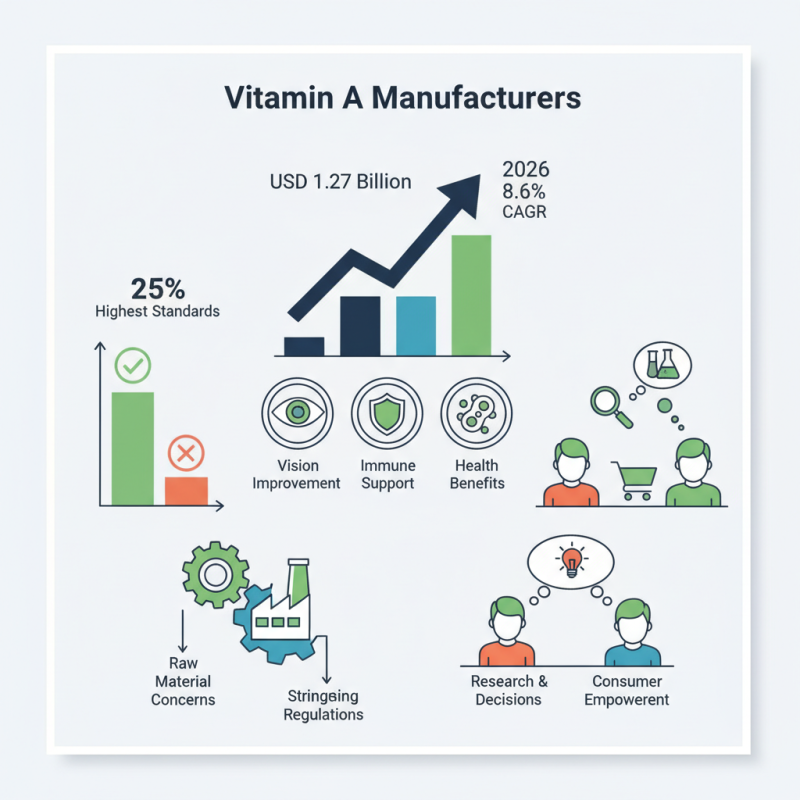
The global vitamin A market plays a pivotal role in the nutritional supplement and food industries. According to industry reports, the market size is projected to reach USD 1.27 billion by 2026, growing at a CAGR of 8.6%. This rise reflects increasing awareness of vitamin A's health benefits, such as vision improvement and immune support. Vitamin A Manufacturers are key players in this thriving sector, providing high-quality products backed by extensive research.
However, the production of vitamin A presents challenges. Variations in raw material quality and stringent regulations can impact supply chains. Some manufacturers struggle to maintain consistency in their products, leading to potential quality concerns. Research by Transparency Market Research highlights that only 25% of vitamin A suppliers meet the highest industry standards. This situation places an added burden on companies that aim to ensure product safety and effectiveness.
As you explore the top vitamin A manufacturers, it’s crucial to consider their commitments to quality and innovation. In this competitive landscape, staying informed about industry players can lead to better health outcomes. Recognizing the complexities within this field empowers consumers to make educated decisions regarding vitamin A supplementation.
Overview of Vitamin A and Its Importance in Nutrition
Vitamin A is a crucial nutrient essential for various bodily functions. It supports vision, immune function, and skin health. This fat-soluble vitamin is vital for maintaining overall well-being. According to the World Health Organization, vitamin A deficiency affects about 250 million children globally, primarily in developing countries. This alarming statistic underscores the importance of ensuring adequate dietary intake.
Sources of vitamin A include animal products and certain vegetables. For instance, liver, fish oils, and dairy are rich in retinol, the active form of vitamin A. Meanwhile, dark leafy greens and orange vegetables provide provitamin A carotenoids. These dietary sources are vital for producing what the body needs. Research shows that a daily intake of 900 micrograms of RAE (Retinol Activity Equivalents) for adults is optimal for health maintenance.
Despite its importance, some people struggle to meet their required intake. Various factors contribute to this, including dietary choices and socioeconomic status. Nutritional education is needed to address these gaps effectively. Consumers should be encouraged to diversify their diets to include both animal and plant sources of vitamin A. This could lead to a broader understanding of nutrition and improved health outcomes.
Criteria for Selecting a Leading Vitamin A Manufacturer
When selecting a leading Vitamin A manufacturer, specific criteria come into play. Quality assurance is paramount. Manufacturers should comply with industry standards, like GMP (Good Manufacturing Practices). Reports indicate that around 72% of consumers prioritize product safety. This is vital in an industry where purity can affect efficacy.
Another critical factor is the company's experience in the market. Companies with a proven track record often demonstrate reliability. Longevity can also signal resilience against market changes. Surprisingly, about 30% of newcomers struggle to maintain quality consistently. A manufacturer’s history can reveal insights into their production processes and supply chain stability.
Furthermore, transparency plays an essential role. Leading manufacturers should provide detailed information about their sourcing and production methods. Studies show that transparency increases consumer trust significantly. While many companies claim to prioritize quality, only a fraction truly practice it. Hence, potential buyers should thoroughly investigate any manufacturer's claims before making a decision.
Top 10 Vitamin A Manufacturers: A Detailed Review
Vitamin A is essential for various bodily functions, including vision, immune function, and skin health. The global market for Vitamin A continues to grow, driven by increasing awareness of its health benefits. According to a recent report by Market Research Future, the global Vitamin A market is expected to reach USD 1 billion by 2026, expanding at a CAGR of 6.5%. This growth highlights the importance of reliable manufacturers that adhere to high standards.
When assessing Vitamin A manufacturers, several factors come into play. Quality control measures are crucial in ensuring product efficacy. Many manufacturers invest in advanced production techniques to maintain the highest purity levels. Industry experts recommend evaluating certifications and testing protocols. This helps to establish credibility.
Tips: Always check for third-party testing. This ensures a product’s quality and safety. Additionally, consider the source of Vitamin A. Natural sources generally provide better absorption than synthetic ones. It's essential to stay informed about the evolving industry standards. Regular updates on industry practices can guide informed decisions. Remember, not all products are created equal; diligence is key in your selection process.
Top 10 Vitamin A Manufacturers: Market Share Comparison
Market Trends and Innovations in Vitamin A Production
The production of Vitamin A is experiencing significant shifts due to new market trends and innovations. Recent reports highlight that the global Vitamin A market is expected to reach approximately $1.8 billion by 2027. This growth is driven by the rising demand across industries such as pharmaceuticals, animal feed, and cosmetics. Vitamin A's crucial role in enhancing immune function and skin health propels its popularity.
Innovations in synthetic production processes are emerging. For instance, advancements in microbial fermentation techniques reduce costs and improve yield efficiency. Recent studies indicate that fermentation can boost production rates by up to 30%. However, challenges remain. Environmental concerns regarding synthetic vitamins can't be overlooked. Balancing efficient production with sustainable practices is critical for the industry's future.
Furthermore, the trend towards plant-based nutrition is shaping Vitamin A sourcing. Consumers increasingly favor natural ingredients. This shift puts pressure on manufacturers to adapt. They must find reliable, plant-derived sources of Vitamin A that meet growing consumer demands. The transition is complex, and not all companies are ready. Nonetheless, the commitment to innovation in Vitamin A production is crucial for staying competitive in this rapidly changing market.
Future Outlook for the Vitamin A Industry and Major Players
The vitamin A industry is poised for significant growth in the coming years. According to market research, the global vitamin A market was valued at approximately $2.4 billion in 2022 and is projected to expand at a CAGR of 6.1% from 2023 to 2030. This growth is driven by increasing demand in food fortification, cosmetics, and dietary supplements. Experts suggest that rising health awareness and the aging population will further enhance this demand.
Understanding the key players in this industry is essential for those interested in vitamin A production. Currently, major manufacturers invest heavily in research and development, aiming to improve product efficiency. Trends indicate that there's a growing interest in natural sources of vitamin A over synthetic alternatives. Consumers are seeking transparency about ingredient sourcing, pushing manufacturers to adapt.
Tips: Regularly check market trends and reports for updated figures. Engage with credible industry publications for insights. Keep an eye on regulatory changes, as they may impact the market landscape. Sustainable practices are becoming increasingly important, and those who ignore this may fall behind.
