What Are Strong Base Anion Resins and Their Applications?
strong base anion resins play a crucial role in various industrial applications. They are essential in water treatment processes, especially in deionization and purification. These resins efficiently remove anions from solutions, making them critical for achieving high-quality water.
The chemistry behind strong base anion resins is fascinating. They contain quaternary ammonium groups that attract negatively charged ions. This feature allows them to work effectively across a wide range of pH levels. However, the choice of resin and its regeneration can be tricky. Factors such as ion selectivity and capacity need careful consideration.
In industries like pharmaceuticals and food production, strong base anion resins are invaluable. They ensure the removal of unwanted impurities, enhancing product quality. Yet, challenges remain. Resins can degrade over time, and their performance may vary. Despite these imperfections, their importance in maintaining standards is undeniable.
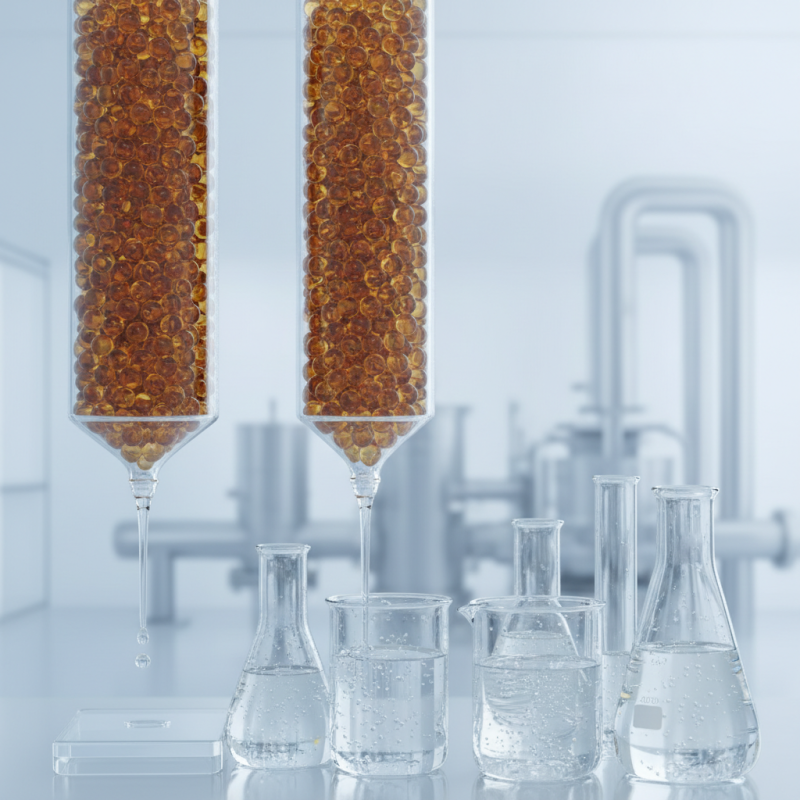
Definition of Strong Base Anion Resins
Strong base anion resins are specialized materials used in various purification and separation processes. They are composed of polymeric structures that can effectively capture and remove anions from solutions. This ability comes from their positively charged functional groups, which attract negatively charged ions. They are vital in water treatment, where they help eliminate contaminants like nitrates and phosphates.
These resins are often applied in industrial settings and laboratories. In a water purification plant, for instance, strong base anion resins are essential for ensuring safe drinking water. They can also be found in pharmaceutical processes, helping to purify reactants and maintain product quality. However, their performance can sometimes be inconsistent. Variations in temperature or pH can impact how well the resins work. It’s a reminder that despite their usefulness, they are not flawless. Choosing the right resin for a specific application can require careful thought and testing.
Chemical Structure and Properties of Strong Base Anion Resins
Strong base anion resins are specialized materials used in ion exchange processes. Their chemical structure consists of a polymer backbone with quaternary ammonium groups attached. This structure is crucial for their ability to attract and bind negatively charged ions in solutions. The efficiency of these resins stems from their high capacity for ion exchange.
In practical applications, strong base anion resins are used in water treatment, food processing, and pharmaceuticals. They effectively remove contaminants like nitrates and phosphates. However, not all applications yield the desired results. Sometimes, the resins can become saturated quickly, requiring frequent regeneration. It’s essential to monitor their performance closely.
The properties of these resins include stability under various pH conditions. They perform well in extreme environments. Yet, their regeneration can be challenging. Not every method is effective for all types of resins. Users often face trial and error in optimizing their use. Understanding the chemistry behind these materials is vital for improving efficiency and achieving better outcomes.
Common Applications of Strong Base Anion Resins in Industry
Strong base anion resins are crucial in various industrial applications. These resins are designed to exchange anions in water treatment processes and chemical manufacturing. They offer high capacity and efficiency. This makes them suitable for critical tasks such as deionization and purification.
In the pharmaceutical industry, strong base anion resins help in removing unwanted byproducts. They ensure that final products meet stringent purity standards. Additionally, they play a significant role in wastewater treatment. They capture harmful contaminants, safeguarding the environment. However, the effectiveness of these resins can diminish over time. Regular monitoring and maintenance are essential.
Beyond water treatment, strong base anion resins are widely used in food processing. They assist in improving taste and quality by removing undesirable chemicals. Yet, the initial setup costs can be high. Companies must weigh the benefits against the investment. There’s also a learning curve involved in handling these resins properly. Mistakes in operation can lead to inefficiencies.
Advantages and Limitations of Using Strong Base Anion Resins
Strong base anion resins are useful in various industries. They effectively remove anions from solutions, including silicates and bicarbonates. Their structure allows them to handle high concentrations of contaminants. This feature is crucial in water purification processes. Industries like pharmaceuticals and power generation benefit significantly from their properties. They ensure the quality of the end product.
However, these resins aren't without limitations. Their effectiveness can diminish over time. This can lead to operational challenges. Regeneration of the resins is necessary but can be costly. In addition, there's often a trade-off regarding capacity and speed. Some applications require quick turnover, but higher capacity resins can slow the process. It’s essential to evaluate each application carefully. Balancing efficiency with performance remains a challenge for many users. There's always room for improvement in optimizing usage.
Comparison with Other Types of Ion Exchange Resins
Strong base anion resins are pivotal in water treatment and industrial processes. They excel in removing anions like sulfate and nitrate. Compared to weak base resins, they offer better performance in a wider pH range. Their ability to operate effectively in harsh conditions makes them suitable for various applications, such as deionization and wastewater management.
When evaluating ion exchange resins, one must consider selectivity. Strong base anion resins typically show higher affinity for certain contaminants. A study highlighted that these resins can retain 95% of targeted ions, while weak base resins managed only about 70%. This can lead to significant process efficiency improvements in industries where purity is critical.
Tips: Ensure to assess the specific contaminants in your system. Each resin type has its strengths. Choosing the right resin can save costs and enhance performance. Regular maintenance is vital. Resin degradation might occur, affecting efficiency. Monitoring performance can help identify when resins need replacement or regeneration.
What Are Strong Base Anion Resins and Their Applications? - Comparison with Other Types of Ion Exchange Resins
| Feature | Strong Base Anion Resins | Weak Base Anion Resins | Cation Resins |
| Ion Exchange Mechanism | Strong bases, react with all anions | Weak bases, react with weakly ionized anions | Exchange cations |
| pH Range | Highly effective at a broad pH range | Effective in slightly acidic to neutral pH | Effective in acidic to neutral pH |
| Common Applications | Water demineralization, wastewater treatment | Removal of specific anions in natural waters | Water softening, metal ion removal |
| Resin Structure | Highly cross-linked, stable structure | Less cross-linked, flexible structure | Cross-linked, stable for cation exchange |
| Capacity | High capacity for anions | Moderate capacity for anions | High capacity for cations |
