How to Choose the Right Laboratory Sample Pulverizer?
Choosing the right laboratory sample pulverizer is crucial for accurate analysis. Dr. Sarah Nguyen, an expert in materials science, emphasizes, "The right pulverizer can significantly impact your results." Selecting the correct equipment is not an easy task. It involves understanding the material types, desired particle sizes, and methods of analysis.
laboratory sample pulverizers come in various types, including swing hammer, ball mill, and disc mill. Each type serves different purposes, and user needs may vary significantly. Not every pulverizer is suitable for every application. As Dr. Nguyen notes, "A mismatched pulverizer can lead to misleading results."
It is essential to evaluate performance and reliability. Users often overlook factors like noise level and ease of maintenance. These aspects can affect long-term usability and efficiency. Reflecting on these details is vital when making a choice. Taking time to consider all elements can prevent costly mistakes in the lab.
Understanding the Different Types of Laboratory Sample Pulverizers Available
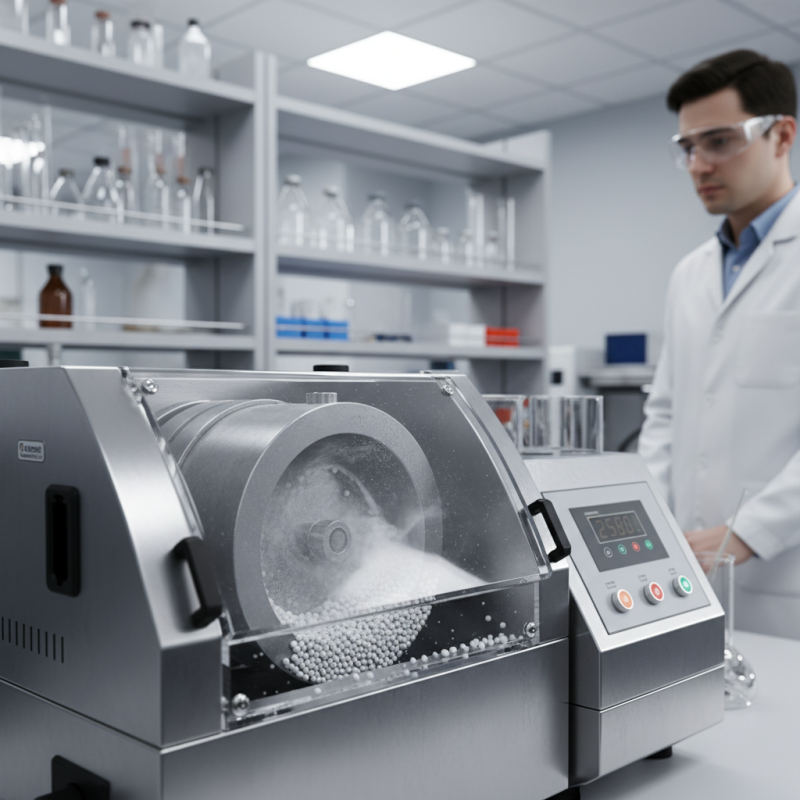
When selecting the right laboratory sample pulverizer, it’s crucial to understand the available types. Different designs serve distinct purposes. For instance, a disc pulverizer grinds materials into fine particles using discs that rotate at high speeds. This is ideal for hard, brittle samples. However, it may not be suitable for softer materials that can clog.
Jar mills offer another option. They grind samples using cylindrical jars filled with grinding media. This method is versatile, accommodating various materials. Yet, it might take longer to achieve the desired particle size. Some might find this cumbersome. Think about your sample's features. If you’re working with liquid samples, a homogenizer could be your go-to choice.
Ultimately, the choice hinges on specific needs. Reflect on what you require for your experiments. Consider your sample type, desired particle size, and the setup of your lab. Each pulverizer has pros and cons. Take time to evaluate them carefully before making a decision. You wouldn’t want to invest in a tool that doesn’t fit your lab’s workflow.
Key Factors to Consider When Choosing a Sample Pulverizer for Your Needs
Choosing the right laboratory sample pulverizer is essential for effective sample processing. When evaluating your options, consider several key factors. The volume of material you need to pulverize is crucial. Different pulverizers handle various amounts of samples. Look for one that meets your capacity needs well.
Material compatibility is another vital factor. Some pulverizers work better with specific materials. Make sure the machine you choose can handle the types of samples you frequently process. You might waste time and resources if you overlook this detail.
Tips: Always check the maximum particle size your pulverizer can achieve. A smaller particle size may be needed for certain applications. It’s also wise to think about the maintenance requirements of the equipment. Some models are easier to clean than others. This aspect can save you time in the long run.
It’s common to underestimate the importance of noise levels. Some pulverizers can be quite loud. If your lab is in a shared environment, this could be problematic. You may face complaints or disruptions. Ultimately, take your time in selecting the right pulverizer. The right choice can significantly impact your research or production quality.
How to Choose the Right Laboratory Sample Pulverizer?
| Factor | Description | Importance | Recommendations |
| Material Type | Consider the material that needs to be pulverized, such as metals, minerals, or organic samples. | High | Choose a pulverizer with appropriate grinding capabilities for your specific materials. |
| Particle Size Reduction | Determine the desired particle size after pulverization. | Medium | Look for models with adjustable settings for particle size control. |
| Throughput Capacity | Assess how much sample material can be processed in a given time. | High | Choose a pulverizer with a capacity that meets your workload demands. |
| Energy Efficiency | Consider the energy consumption of the pulverizer. | Medium | Opt for energy-efficient models to reduce operational costs. |
| Cost | Evaluate the upfront cost and long-term maintenance expenses. | High | Consider your budget while aiming for quality and durability. |
Comparative Analysis of Sample Pulverizer Performance Metrics and Specifications
Selecting the right laboratory sample pulverizer requires careful consideration of various performance metrics. These metrics can include particle size, throughput rate, and material compatibility. An efficient pulverizer should produce uniform particle sizes for precise analysis. Some devices excel in speed, while others offer better consistency. Matching the pulverizer's capabilities with your material's requirements is crucial.
Specifications also play a vital role. Think about power consumption, noise levels, and ease of maintenance. High energy usage may lead to increased operational costs. A quieter machine can enhance the work environment. However, not all machines are user-friendly. Some may require extensive training to operate effectively, raising concerns.
Assessing these factors is not always straightforward. Misjudging the specifications can lead to selecting an inadequate pulverizer. Additionally, the most powerful option isn't necessarily the best for every application. Balancing performance with practical considerations can be challenging. Reflect on your specific needs and potential trade-offs. This approach will help in making a more informed decision.
Industry Standards and Guidelines for Laboratory Sample Pulverizer Selection
Selecting the right laboratory sample pulverizer requires careful consideration of industry standards and guidelines. Different types of pulverizers are suited for various materials. The size reduction process must match the material’s properties, including hardness and moisture content. According to industry reports, nearly 30% of sample preparation issues stem from improper equipment choices.
Operators should evaluate the pulverizer's capacity. This is crucial, especially in larger labs. A mismatch can lead to delays and ineffective results. For instance, labs processing more than 50 samples a day need robust equipment. A typical small-scale pulverizer may only handle 10 samples efficiently. Moreover, the consistency in particle size is important. Research shows that a variation greater than 10% can affect the reliability of test results.
Cost is another critical factor. Some high-end units may offer advanced features, but they can strain budgets. Laboratories should analyze their workflow and prioritize essential functionalities. Regular maintenance is a must. Neglecting equipment can lead to performance dips and inaccurate results. Industry data indicates that poor maintenance contributes to nearly 25% of operational failures in sample preparation.
Maintenance and Care Tips for Ensuring Optimal Pulverizer Performance
Proper maintenance of a laboratory sample pulverizer is crucial for optimal performance. Regular inspections help identify wear and tear. A study from the National Institute of Standards and Technology (NIST) revealed that 30% of machinery failures result from inadequate maintenance. Keeping the pulverizer clean is essential. Dust and residue can accumulate, affecting its efficiency. Daily cleaning is a must after use.
Additionally, calibrating the pulverizer regularly ensures consistent particle sizes. A report from ASTM International states that uniformity in particle size can improve subsequent analysis by up to 15%. Always check for loose bolts and misalignment. Even small issues can lead to significant problems down the line.
Monitoring the noise levels during operation can also indicate maintenance needs. Unusual sounds may signal underlying mechanical issues. Users often overlook these signs, which can lead to costly repairs. Be proactive and maintain a log of all maintenance activities. This log can help in identifying patterns that may indicate a need for more frequent checks.
