
7 Best Shilajit Extract Suppliers for Global Buyers
Global buyers are paying closer attention to Shilajit Extract, but a rising market does not guarantee reliable products. Grand View Research’s Shilajit market analysis tracks demand across product forms and regions; it also points to a crowded supplier landscape. For buyers, the practical question is not just where a resin or capsule comes from. It is whether the supplier can document its source, processing, batch consistency, and testing.
The evidence calls for care. In a review published in the International Journal of Alzheimer’s Disease, researcher Luis Guzmán and co-authors describe shilajit as “a natural phytocomplex that is used in Ayurvedic medicine as a rejuvenator.” That description is not proof that every extract delivers a health benefit. A separate JAMA study by Saper and colleagues found detectable heavy metals in 20.7% of sampled Ayurvedic medicines sold online; the finding concerned those products, not Shilajit Extract specifically. Details matter. Buyers should request current, batch-specific test reports and check that testing covers identity, purity, and contaminants. A polished website is not a substitute. The seven suppliers in this guide are assessed through practical sourcing criteria, including traceability, documentation, export experience, and clarity about specifications. Some supplier claims may still be difficult to verify independently. That limitation deserves attention, not a footnote.
What Shilajit Extract Is and How It Is Sourced
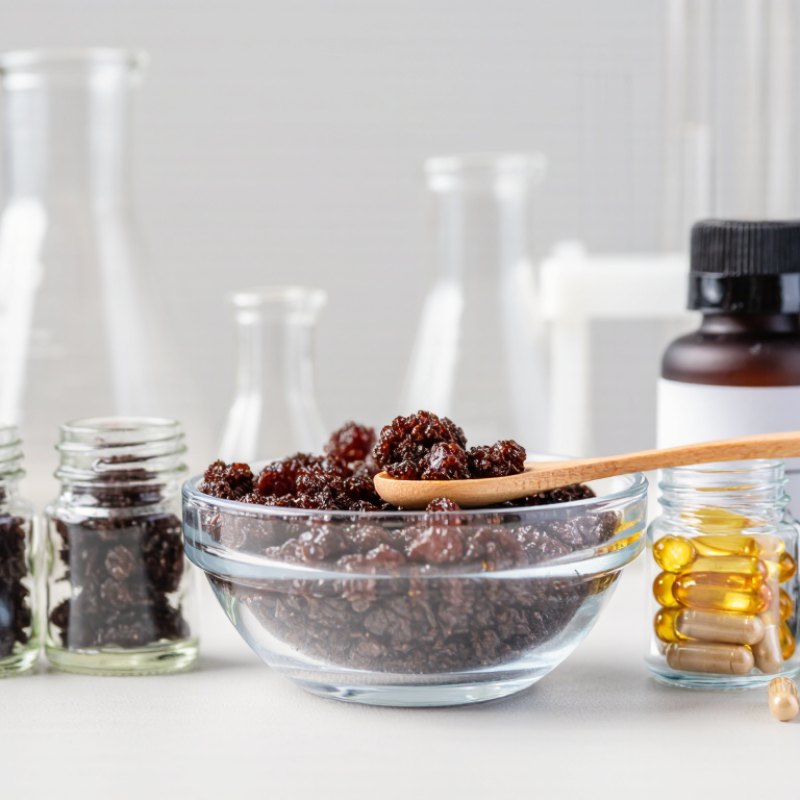
Shilajit extract is made from a dark, resin-like material found in mountain rock crevices. It develops over long periods from decomposed organic matter and minerals, though its exact formation can vary by region. Warm weather may soften the material, allowing workers to collect it from exposed rock. It is not a uniform raw ingredient. Color, texture, and mineral content can differ between collection areas and batches.
After collection, the material is typically cleaned, filtered, and processed into a concentrated extract. Careful purification matters because raw material may contain grit or unwanted contaminants. Buyers should look for clear information about collection region, processing steps, and batch testing. Independent laboratory results can help verify identity and check for heavy metals and microbial contamination. Testing supports quality control; it does not prove health benefits. The picture is less tidy than a supplier brochure may suggest, so ask questions when details are vague.
Tips: Request a recent certificate of analysis for the specific batch, not just a general sample. Check that the document names the test methods and laboratory. Compare the extract’s appearance and consistency with its specification, but do not rely on appearance alone. A dependable supplier should explain what it can verify—and what remains uncertain.
How to Evaluate Shilajit Extract Suppliers
The Council for Responsible Nutrition’s 2024 consumer survey found that 75% of U.S. adults use dietary supplements. That demand makes supplier checks more important, not less. Ask for a lot-specific certificate of analysis, not a generic sample. Check whether it identifies the material and reports fulvic acid using a stated, validated method. The World Health Organization’s 2011 quality-control guidance for herbal materials highlights identity, purity, and contaminant testing. Test the batch. For shilajit extract, request results for lead, arsenic, cadmium, and mercury, plus microbial limits and relevant pesticide screening. Confirm which laboratory performed the tests and whether it holds ISO/IEC 17025 accreditation.
A certificate is only as useful as its methods and traceability. Ask suppliers to connect the tested lot to its origin, processing records, and shipment documents. Compare several batches for consistent composition; one impressive result proves little. Request stability data, packaging specifications, and storage conditions, especially if the material travels through hot or humid warehouses. A low price may reflect efficient processing, but it may also leave testing gaps. I would ask for raw reports when values seem unusually uniform. Details matter. Supplier audits, change-control records, and retained samples can help buyers investigate discrepancies later. No document replaces independent verification, and even a thorough review cannot guarantee every future batch.
Quality Testing and Compliance for Global Buyers
For global buyers, quality checks should begin with identity, not appearance. Shilajit extract can vary by source and processing, so request a batch-specific certificate of analysis. Check whether it reports identity, key composition measures, heavy metals, and microbial results. The report should name the test methods, units, and laboratory. An independent laboratory with suitable accreditation can strengthen confidence, but a certificate alone does not guarantee every batch is safe or consistent.
Tips: Match the lot number on the report to the product documents. Ask for the sampling date and retest policy. Keep the answers on file.
Compliance also depends on the destination market. Confirm its current rules for ingredient status, permitted limits, packaging, and labeling before placing an order. Review any health claims carefully; wording acceptable in one market may not be acceptable in another. Request traceability records, manufacturing controls, and written change-notification terms from suppliers. These details help buyers investigate a failed test or unexpected variation. Still, paperwork can look polished while leaving practical gaps. Ask specific questions, compare documents across lots, and have qualified local compliance professionals review uncertain requirements.
Profiles of Seven Shilajit Extract Suppliers
The seven profiles represent supplier models, not endorsements. Supplier 1 is origin-led, documenting harvest regions and collection seasons. Supplier 2 specializes in standardized extracts and provides clear marker-compound specifications. Supplier 3 offers contract processing, with batch records and controlled production steps. Supplier 4 emphasizes testing, sharing certificates of analysis for identity, metals, microbes, and solvents. Supplier 5 handles small lots and may suit buyers testing a new formulation. Supplier 6 focuses on bulk distribution, where consistent stock and shipment records matter. Supplier 7 prioritizes traceability from raw material to finished extract. Details vary; verify them.
The American Botanical Council’s 2023 HerbalGram market report recorded U.S. herbal supplement sales of $12.3 billion in 2022, up 9.7% from 2021. These figures describe the broader herbal supplement market, not shilajit alone. They do signal why buyers should scrutinize quality claims. The World Health Organization’s 2011 quality-control guidance for herbal materials covers identity, purity, and contaminant testing. Ask each supplier for recent, batch-specific results, not a generic sample report. Check whether the stated extract ratio matches the tested material, and confirm how samples are stored before analysis. Paperwork matters. A polished certificate can still leave gaps, especially when testing methods or sample dates are unclear.
| These are anonymized regional sourcing profiles, not verified or ranked companies. Shilajit composition and quality can vary by deposit, batch, and processing method; confirm all specifications with the actual supplier. | |||||
|---|---|---|---|---|---|
| Profile | Indicative sourcing region | Form to ask about | Key buyer checks | Documentation to request | Best fit for |
| 1. Himalayan India sourcing profile | Himalayan areas of India; confirm the specific collection area and legal origin for each lot. | Resin, water-soluble extract, or powder, depending on the supplier’s process. | Verify identity, batch consistency, moisture, and whether the material is purified. Do not treat a stated fulvic-acid percentage as proof of authenticity on its own. | Current batch certificate of analysis (COA), contaminant results, product specification, and traceability records. | Buyers seeking a Himalayan-origin product with documented batch-level controls. |
| 2. Himalayan Nepal sourcing profile | Himalayan areas of Nepal; request precise origin details rather than relying on a broad regional label. | Resin or dried extract; confirm the finished form and permitted uses in the destination market. | Check harvest and export documentation, processing aids, and batch-to-batch analytical data. | COA, origin and export documents where applicable, manufacturing details, and heavy-metal test results. | Importers who prioritize origin traceability and can assess cross-border documentation. |
| 3. Himalayan Pakistan sourcing profile | Mountain areas in northern Pakistan; verify the stated collection location and supply-chain custody. | Crude material or processed extract; establish which one is being quoted. | Confirm purification steps, identity testing, microbial limits, and compliance with the buyer’s product category. | Batch COA, contaminant panel, process-flow summary, and applicable export and facility documents. | Buyers able to conduct enhanced origin and regulatory due diligence. |
| 4. Altai-region sourcing profile | Altai mountain region across parts of Central and North Asia; ask for the exact country and collection area. | Typically offered as a processed extract or resin; available forms depend on the supplier. | Check geographic traceability, species/material identification methods, and whether the assay method is disclosed. | COA with test methods, country-of-origin documentation, contaminant tests, and batch identification. | Buyers comparing non-Himalayan mountain-origin supply options. |
| 5. Pamir-region sourcing profile | Pamir mountain region; request country-specific origin and evidence linking the lot to its source. | Extract powder or resin, subject to the supplier’s documented manufacturing process. | Assess supply continuity, lot traceability, purity, and the reliability of third-party laboratory testing. | COA, traceability records, laboratory identity and accreditation details, and contaminant results. | Buyers who need a documented supply chain and can validate regional sourcing claims. |
| 6. Caucasus-region sourcing profile | Caucasus mountain areas; confirm the country, collection location, and legal status of the material. | Ask whether the offer is raw material, purified extract, or a finished consumer product. | Review the extraction and purification description, batch specifications, and destination-market restrictions. | Product specification, batch COA, process information, and applicable export or regulatory documents. | Buyers evaluating regional alternatives and requiring clear processing disclosures. |
| 7. Multi-origin consolidator profile | May aggregate material from more than one mountain region; origin can vary between batches. | Often offers multiple formats, but each format and origin should be verified separately. | Require origin disclosure by lot, segregation controls, change-notification terms, and consistent test methods. | Lot-specific COA, origin statement, supplier-chain records, and written change-control procedures. | Buyers seeking broader availability, provided they can manage mixed-origin and batch-variation risks. |
| Buyer note: No single global specification guarantees shilajit quality. Compare suppliers using the same analytical methods, request independent testing for identity and contaminants, and check the import, labeling, and health-product rules that apply in your destination market. | |||||
How to Select a Supplier for Your Business Needs
A reliable shilajit extract supplier should make quality checks easy to verify. Ask for a batch-specific certificate of analysis, not only a generic sample. Check whether it identifies the tested material and reports relevant measures, such as composition, heavy metals, and microbial results. The testing method and laboratory details should be clear. A polished PDF is not proof by itself. Confirm that the batch number matches the product you may purchase.
Evaluate how the supplier manages consistency and delivery. Request specifications for the extract, including its form, concentration, and storage requirements. Ask how production changes are documented and how complaints are handled. A small trial order can reveal practical issues, such as clumping, packaging leaks, or delayed paperwork. Also check whether the supplier can provide traceability documents and information needed for your destination market. Good communication matters. Still, a quick reply does not guarantee dependable operations.
Tips: Compare two or three suppliers using the same questions. Keep written records of answers and sample results. Clarify minimum order quantities, lead times, and payment terms before committing. If a claim sounds unusually broad, ask for evidence. Be willing to pause; supplier selection is not always tidy.